

Since theceasefire began on October 10, life inGazafeels like coming back from a horrible nightmare, says 48-year-old Heba.
She feels it is a miracle that she survived last the two years of war and is now trying to rebuild some semblance of normal life with her family, despite her constant anxiety.
We dont feel safe. Today we were able to get food, but tomorrow? Nothing is guaranteed, the war could come back, and we are constantly on high alert, she says.
Despite the ceasefire, only small amounts of humanitarian aid are trickling into the Palestinian enclave, and the Israeli strikeshave not completely stopped.
At least 556 Palestinians have been killed by Israeli strikes since the truce began according to figures from the Gaza Health Ministry released on February 6.
We lack everything
Little has changed in Gaza in the four months since Israel ceased the massive bombardments that killed more than 71,000 people a death toll the Israeli Defense Forceshave largely validated.
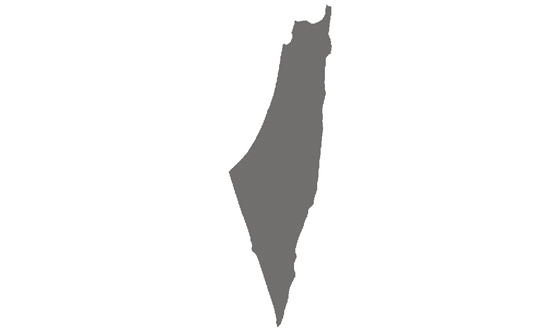
Due toongoing Israeli military operationsand imposed buffer zones, most of the enclaves two million inhabitants are still confined to living in coastal areas in the south and centre, which make upless than 40 percentof Gazas total territory.
More than one million people arein need ofemergency shelter assistanceaccording to the United Nations. Most are living under tarpaulins or in tents provided by the organisation.
Among them are Salma* and her family, who were forced in April to flee their home situated on Israels yellow line which separates the territory into an area controlled by the Israeli army and another where Gazans are permitted to live.
They moved to an overcrowded camp in the central town of Al-Zawaida, which is sorely lacking in resources. Salma now charges her phone in a neighbouring caf.
There are a lot of families here, and those who cant find space are living on the beach, she says.Food, water, medicine we lack everything and every day is a challenge.
Living in ruins
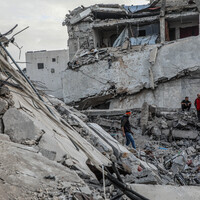
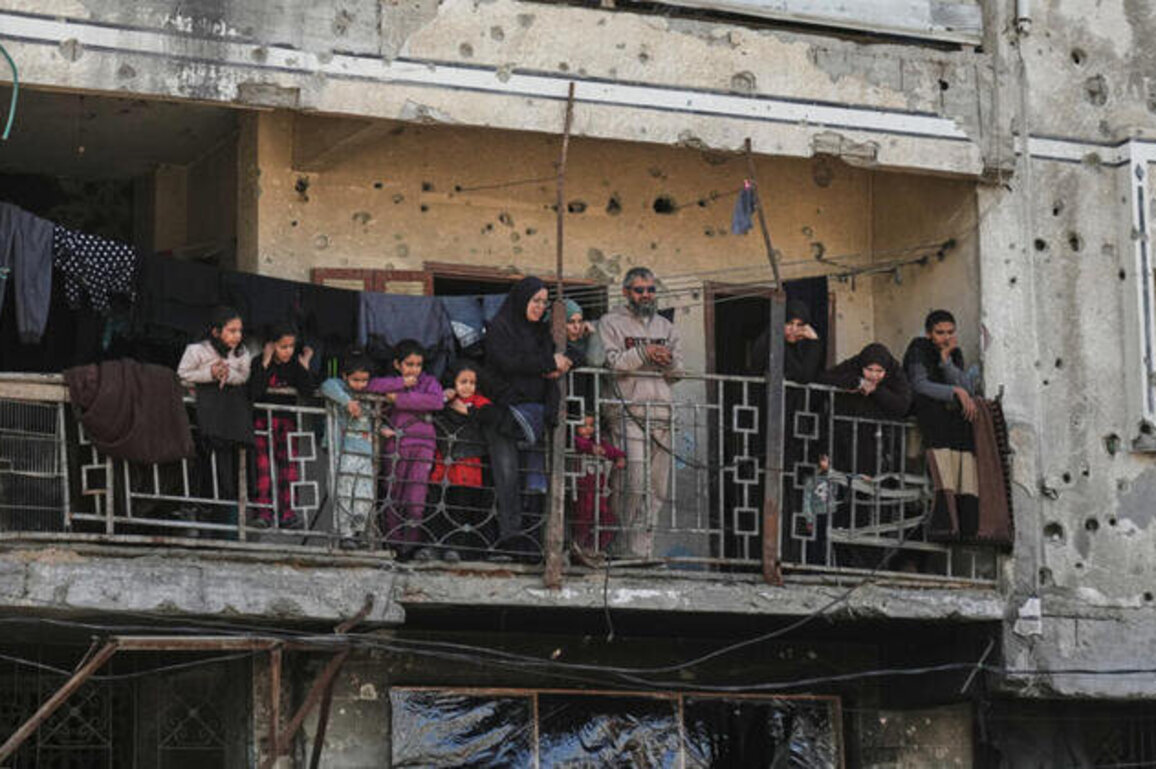
In an attempt to escape cold winter temperatures, wind and heavy rains that havecaused flooding in many camps, some Gazans have taken to living in damaged buildings.
Doing so brings its own risks: at least25 Palestinians were killedby collapsing buildings in December and January, according to the Gaza Health Ministry.
Sobhi has carried on living in a damaged building anyway. Life in the tents is not a life. We live surrounded by pollution and rubble abandoned, he says. Our childrendont go to school. There are no words to describe this reality.
After the ceasefire, the 30-year-old left the camp with his family and returned to their house in Sheikh Radwan, northern Gaza one of the zones most badly affected by Israeli strikes.
Our neighbour nearly died two weeks ago when her house collapsed, Sobhi says. She needed metal reinforcements and she tried to raise the alarm but couldnt find any help. We are living in the same conditions. There is nothing here. Every day we have to find water to survive.
In Gaza city, where more than two thirds of buildings were destroyed by Israeli strikes, it is still possible to rent rare apartments that are more or less habitable but at exorbitant prices.
For 1,500 shekels a month [480] you can rent an apartment that is partially damaged, sometimes without windows and normally without electricity or water, says Heba. Apartments that are undamaged and fully functional cost three times as much.
Heba has been able to find an apartment for her family because she is a humanitarian worker for the French organisation Mdecins du Monde, but for most Gazans accommodation has become an unaffordable luxury.
Cash crisis
Since the ceasefire came into effect some supermarkets and open air markets have reopened selling products almost exclusively imported via the Kerem Shalom and Erez checkpoints, which arestrictly controlled by Israel.
Although the Rafah crossing reopened on February 2, it is currently limited to foot traffic.
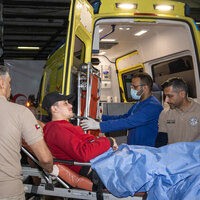
Read moreGazas Rafah crossing reopens, first medical evacuees enter Egypt
Food prices, which skyrocketed at the height of the conflict, have fallen sharply. A box of eggs now costs six times less, at around 25 shekels (6.8), and rice is ten times cheaper at 10 shekels a kilo (2.75).
But even these lower prices are out of reach for many Gazans who, without income, have become entirely reliant on humanitarian organisations.
Almost all agricultural land has beendestroyed by strikes, as have more than half of all wells. On top of this, there is a money crisis as cash has become a rare commodity.
Read morePlanting to preserve our dignity: Gaza farmers remain cut off from their land
"Some banks have reopened but only for administrative tasks and ATMs dont work, says Heba. The only money in circulation is from before the war. Not everybody has a bank account, and some people lost their savings during the strikes and have been left with nothing.
"The economy in Gaza has collapsed. We have no money or work. Nothing has changed for us since the ceasefire, adds Salma.
Unimaginable violence
After two years of being displaced across Gaza, following evacuation orders from the Israeli army, Heba has now been able to resume her full-time job at Mdecins du Monde.
She coordinates seven first aid clinics, all overrun with patients many of whom havecontracted infectious diseasesdue to living in overcrowded, unsanitary conditions.
"I see my work as a mission, she says. I have survived this atrocity, and I must continue to help my people. Nobody can imagine the level of violence we have lived through, even in Gaza where life was already difficult."
Heba hopes that the borders will reopen so she can see her sons who are studying in Jordan and Turkey, but she doesnt believe it will happen.
In Al-Zawaida, Salma contemplates a bleak future.
Life is impossible here, all our memories have disappeared, destroyed by bombs, she says. I try to hope that things will get better one way or another. I have to hope, if only for my family. Thats all we have left the hope that one day we will be able to live in dignity again.
*name changed on request.
Contact with interviewees in Gaza was facilitated by the organisations Mdecins du Monde and Dignit International.
This article was adapted by Joanna York.Click hereto read the original in French.
Originally published on France24