

On March 30, Donald Trump threatened Iran with completely obliterating Kharg Island if a deal with Tehran was not reached to end the ongoing war with the US and Israel.
The American president's warning has since focused attention on the offshore island's central role in Irans economy and global energy markets.
A street in the center of Kharg Islands township, at the northeastern corner of the island, photographed in 2022.
Some 90 percent of Irans oil exports are shipped from Kharg Island, mostly to China, using infrastructure built under Irans last Shah.
Kharg Islands coastline in the 1950s, before the island was transformed into Irans primary oil export hub.
Kharg was described in the 1800s as the most important strategic point in the Persian Gulf, due to its position at the head of the gulf, and its natural spring water supply.
In the 1950s Kharg was used as a penal colony for anti-shah dissidents, before being chosen as the site for a planned oil export terminal.
An ancient rock-cut tomb on Kharg Island.
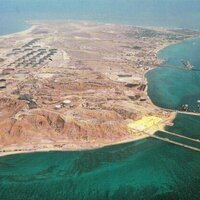
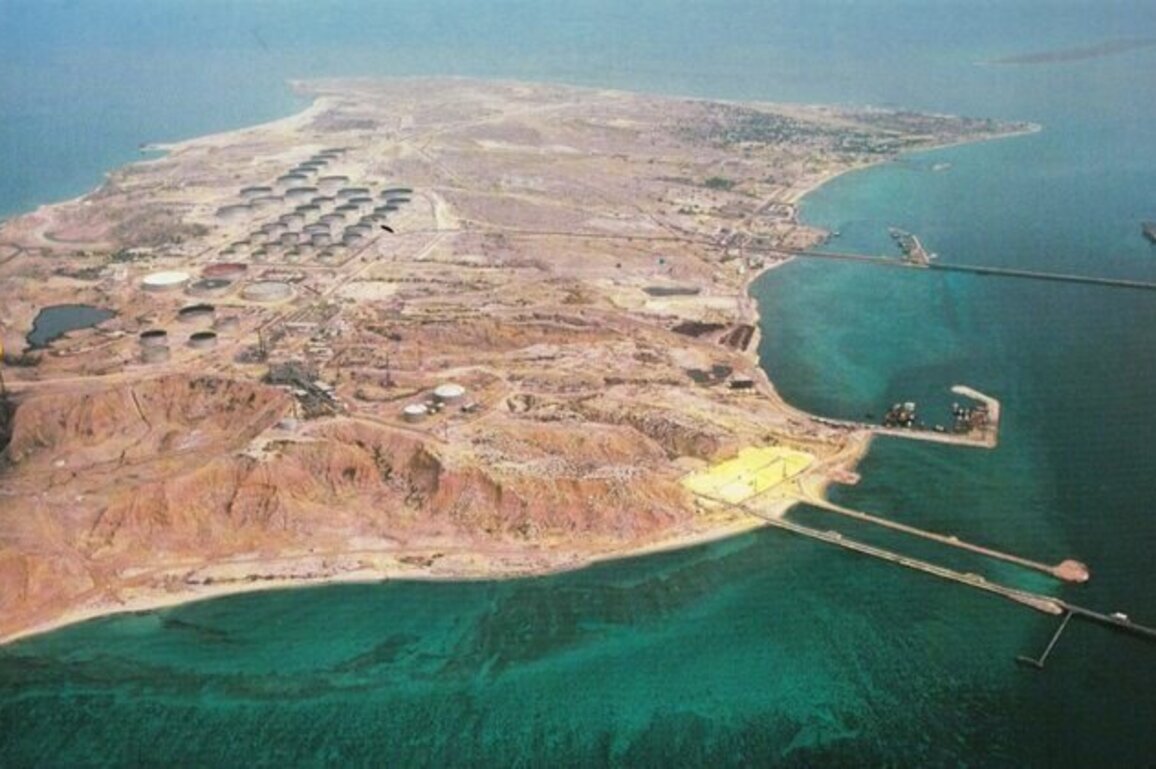
The sunbaked coral island, lying 31 kilometers off the coast of mainland Iran, was picked to become the Middle Eastern countrys primary oil export hub due its deep surrounding waters and the relatively calm seas that lap its shores.
Both factors allow for massive oil tankers to dock off the island and fill up on Iranian crude before steaming south through the Strait of Hormuz and on to the worlds oil markets.
Oil pipelines on Kharg Island being constructed in the 1970s.
Iranian writer Jalal Al-e-Ahmad visited the island during its transformation into an oil hub that began in 1959. He described machinery directed by Iranian and Western engineers erasing the old Kharg from the face of the earth.
Oil tankers alongside the eastern dock of Kharg Island in the 1960s.
Underwater pipelines funneling oilsome 37 kilometersfrom the Iranian mainland were laid to Kharg, where storage tanks of up to a million barrels each could hold the crude.
The islands geography allowed for gravity to flow oil downhill into tankers without the need for complex pumping systems.
Kharg Islands western dock being constructed in water deep enough to handle the largest fuel tankers in existence.
Development continued into the 1970s when a "sea island" (pictured above), which allowed for the largest oil tankers to be loaded through submarine pipelines, was completed off the western coast of Kharg.
A beach for use by National Iranian Oil Company employees on Kharg, seen in 1970.
After the 1979 Islamic Revolution, facilities on Kharg, which were partly run by American oil giant Amoco, were taken over by Irans new rulers.
In 1990, Tehran paidmore than half a billion dollarsin compensation to Amoco for the seizure of Kharg's oil infrastructure as well as several offshore drilling fields.
An oil tanker burns in December 1987 after being attacked by an Iranian warship as it neared the Strait of Hormuz.
In 1984, Iraqi strikes on Kharg Islands oil facilities during the Iran-Iraq conflict escalated what became known as the tanker war, in which both sides attacked vessels carrying the others oil. The Kharg island facilities wereall but destroyedby the Iraqi Air Force through the 1980s.
Pipelines and oil storage tanks on Kharg in 2017.
After repairs were completed following the Iran-Iraq War and facilities on Kharg were expanded, the oil hub was offloadingaround 1.5 million barrelsof oil each day, a volume worth some $172 million at April 2026 prices.
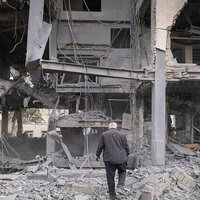
A combination picture shows a site on Kharg Island on February 25 (top), before US strikes, and on March 14, after America targeted purported military facilities on the island.
Following the US strikes on military facilities on Kharg Island on March 13, Trump stressed that we destroyed everything on the island except for the area where the oil is
An image purporting to show Iranian workers departing by ferry from mainland Iran to Kharg after the March 13 strikes.
Today around 8,000 people are believed to live on the island, which is tightly guarded by Irans Islamic Revolutionary Guards Corps.
Wildlife on Kharg Island.
Analystssayany strike on Khargs oil facilities, which bring Tehran tens of billions of dollars in revenue each year, would cripple the Iranian regime's ability to function.
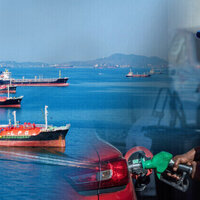
But such a move would also have an outsized impact on the worlds economy at a time of already soaring energy prices.
Coral And Crude: Life On Iran's Kharg island
Share
ShareCopy link
Facebook
X (Twitter)
LinkedIn
Email
Share
ShareCopy link
Facebook
X (Twitter)
LinkedIn
Email