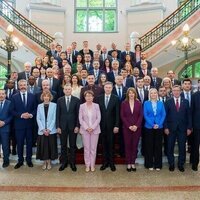


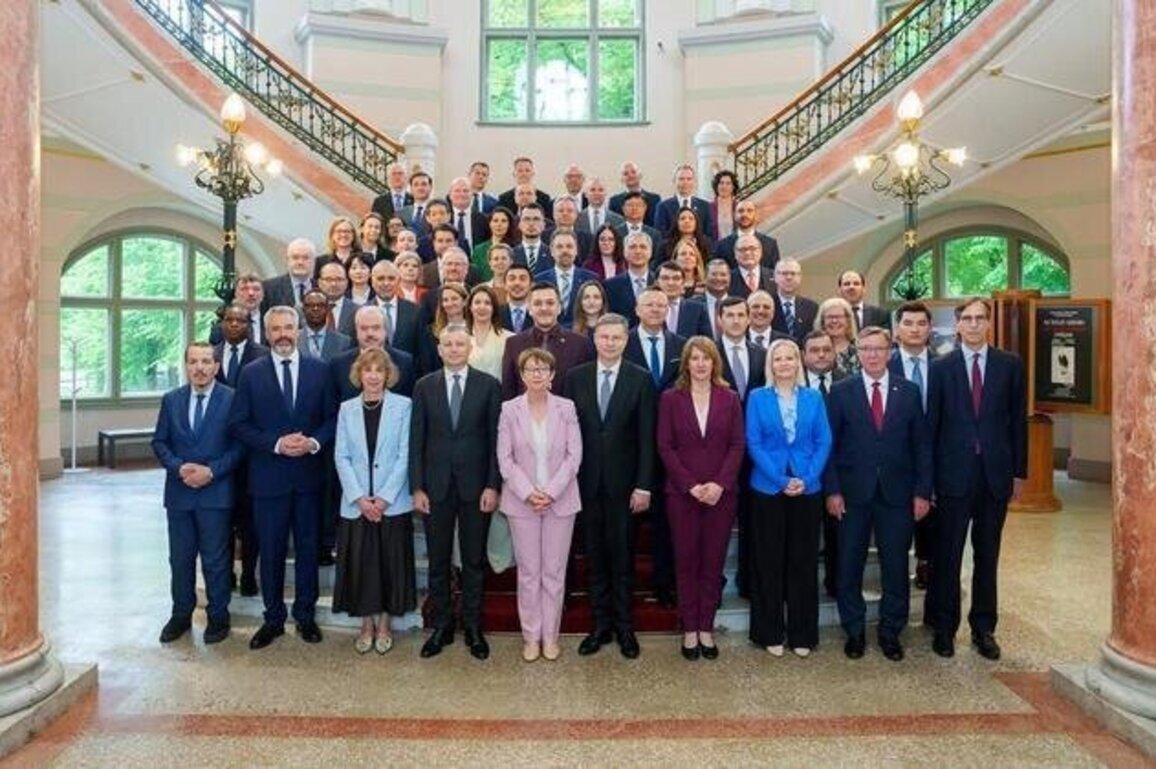
RIGA, 6th June May, 2026 (WAM) -- The United Arab Emirates, represented by the Ministry of Finance, participats in the Annual Meeting of the Board of Governors of the European Bank for Reconstruction and Development (EBRD), hosted in the Latvian capital, Riga, from 5th to 7th June 2026.
The meeting brought together senior officials, policymakers and representatives of international financial institutions from around the world. The UAE delegation was headed by Ali Abdullah Sharafi, Assistant Under-Secretary for International Financial Relations at the Ministry of Finance, accompanied by a team of ministry specialists.
The UAE's participation reflects its commitment to strengthening cooperation with international financial and development institutions, supporting global efforts to advance economic stability and sustainable development, and reinforcing multilateral action and international partnerships aimed at addressing pressing economic challenges.
Addressing a specialised session titled "Advancing Economic Governance," Ali Abdullah Sharafi delivered the UAE's keynote address, highlighting the global economic implications of regional conflicts and underscoring the importance of enhanced international cooperation in securing market stability, strengthening supply chains, and bolstering energy and food security.
He stressed the importance of the Bank continuing to expand its support for countries most affected by global economic challenges. He advocated leveraging the EBRD's financial instruments and technical expertise to advance renewable energy initiatives, diversify energy sources, and reduce exposure to price volatility.
He also highlighted the need to work closely with member countries to strengthen financial and development policies, improve the efficiency of development financing, and support economic growth, job creation, and an improved quality of life.
Food security and agricultural sustainability took center stage in Sharafi's remarks. He called for expanded technical assistance and innovative financing solutions, urging member states and the wider international community to intensify cooperation in support of vulnerable food systems.
He also noted that investment in digital infrastructure has become a cornerstone of sustainable growth and national competitiveness, particularly as digital transformation continues to accelerate worldwide. This approach aligns with broader international priorities aimed at building more connected, resilient and future-ready digital economies.
Such investments, he noted, should encompass high-speed telecommunications networks, cloud computing infrastructure, data centres, and emerging technologies such as Artificial Intelligence (AI). Together, these investments help drive innovation, enhance the efficiency of government services and strengthen private-sector performance.
The three-day meeting featured a packed, strategic agenda. The first day commenced with the official opening ceremony of the Board of Governors, followed by the adoption of the agenda and regulatory reports, alongside the opening remarks.
The second day witnessed the convening of the Board of Governors' plenary session and a series of roundtable discussions focused on key global economic and development issues. Discussions covered the Bank's critical role in stabilising conflict-affected economies, the future roadmap for EBRD activities in Ukraine, and strategic frameworks for advancing economic governance across the Bank's countries of operations.